
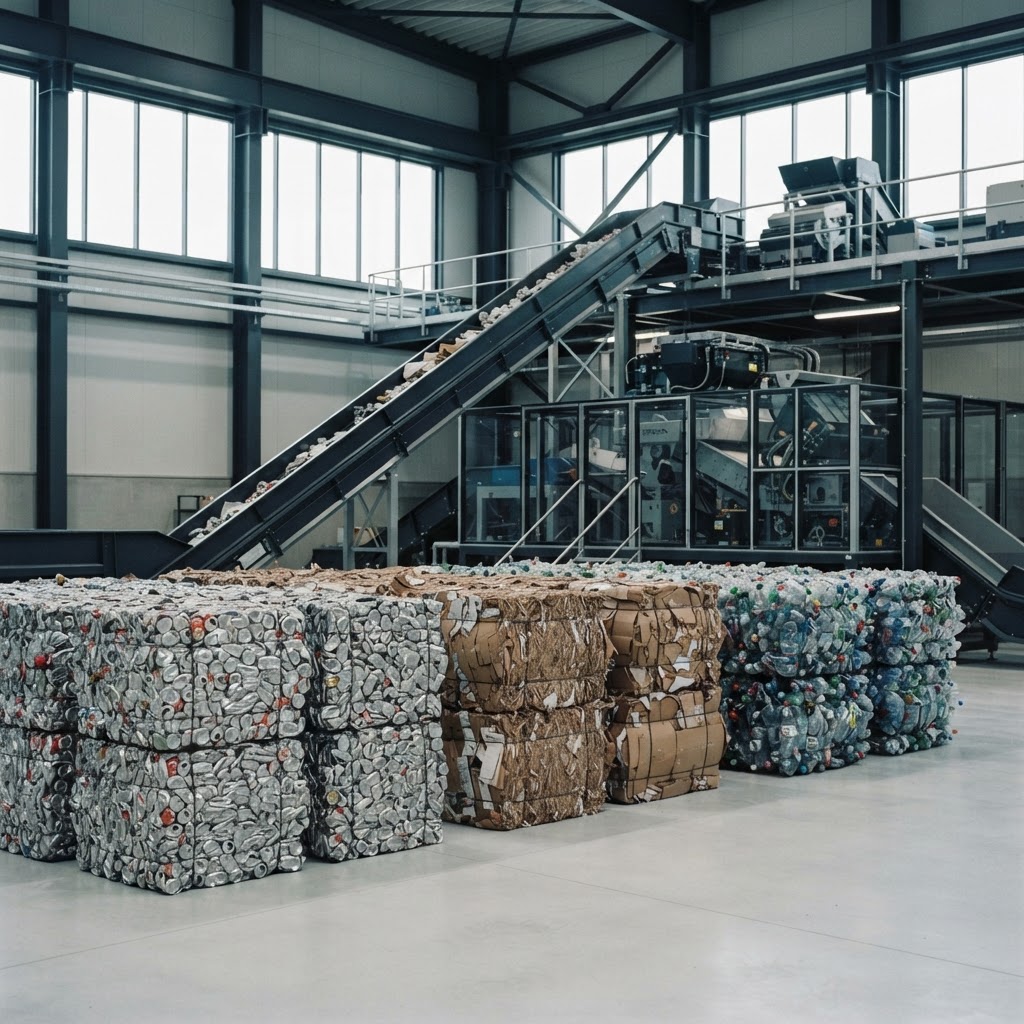
Industry verticals — Circular Economy
Waste is becoming one of the economy’s most valuable resources.
Today’s largely linear economy loses an estimated €25.4 trillion of value every year, close to a third of global GDP. Keeping materials in use, through better design, reuse, repair and recovery, is opening new markets, new ventures and new jobs. The UAE has made the circular economy a national priority and is putting it into law.
Where the sector is heading
01
Closing the value gap
Global view
The Circularity Gap Report 2026 estimates that around €1 is lost for every €3 of value the global economy creates, through processing and energy losses, food waste, end-of-life waste and assets that deteriorate early.
UAE lens
The UAE Circular Economy Policy 2021–2031 sets the national direction, and the UAE Circular Economy Council has approved 22 policies to speed it up across manufacturing, food, infrastructure and transport.
02
From landfill to recovery
Global view
A record 62 million tonnes of e-waste was generated in 2022, and only 22.3% was documented as properly collected and recycled, leaving most of US$91 billion in recoverable metals unrecovered.
UAE lens
The UAE aims to divert 80% of its waste from landfill by 2031, and Abu Dhabi’s Tadweer Group is working to close 11 landfill sites.
03
Rules reshape products and packaging
Global view
From 18 February 2027, EV, industrial and other large batteries sold in the EU will need a digital battery passport, a first step towards product passports that track materials across their life.
UAE lens
Since 1 January 2026, the UAE has banned the import, production and trade of single-use plastic cups and lids, cutlery, plates, straws, styrofoam food containers and thin bags.
04
New circular value chains
Global view
Only around 1% of textiles are recycled worldwide, leaving one of the largest material streams almost untouched.
UAE lens
The UAE’s Naseej initiative, launched in 2026 with 14 private-sector partners, is building collection and recycling pathways for the around 220,000 tonnes of textile waste the country generates each year.
How innovation will shape it
The role of AI and emerging tech
AI and digital tools make it possible to know what materials exist, where they are and what they are worth, turning waste streams into supply chains.
- AI and computer vision that sort and grade waste streams with high accuracy
- Digital product passports and traceability across supply chains
- Marketplaces that match secondary materials with manufacturers
- Predictive maintenance and repair that extend the life of products and assets
- New materials and packaging designed for reuse and recovery
The role of talent
Skills for the next economy
Global view
Between 121 and 142 million people already work in the circular economy, around 5% of non-agricultural jobs, mostly in repair and maintenance, manufacturing and waste management.
UAE lens
With new rules on plastics, landfill and textiles, demand is growing for people who can redesign products, run recovery systems and build circular business models.
The sector needs engineers, designers, data and supply chain specialists, and entrepreneurs, and young people ready to build businesses that keep resources in use.
How we work with governments and corporates
We design the right format for what you want to advance.
Capital & Markets
Investor platforms, live pitches, curated deal rooms and market access that connect ventures with capital, buyers and new markets.
Programmes
Accelerators, challenges, innovation sprints and hackathons that turn ideas into solutions.
Partnerships
Partnership strategies and sponsorship programmes that bring corporates, funders and stakeholders on board to back and scale your initiative.
Youth & Entrepreneurship
Entrepreneurship programmes, skills bootcamps, challenges and forums that build the mindset young people need for the future of circular economy.
Ecosystem Connections
Sourcing, introductions and communities that connect startups, SMEs, investors and young talent across MENA.
Experiences
Forums, conferences, roundtables and leadership dialogues, designed and delivered as experiences that bring the right decision-makers together.
Our work in circular economy
Zayed Sustainability Prize
Regional outreach partner since 2024
We lead the Prize’s outreach across MENA, reaching startups and SMEs with sustainability solutions and encouraging the strongest to apply, and we shape its partnership strategy.
Deal rooms and market access
For corporates and investors
We connect startups and SMEs that turn waste into value with buyers, investors and pilot partners through curated deal rooms and one-to-one meetings.
Youth 4 Sustainability
An initiative by Masdar
We design and deliver programmes and forums that equip young people with the skills and connections to build solutions that cut waste and keep resources in use.
Let's design the right format for your goals.
Let's co-createSources
- Circle Economy, Circularity Gap Report 2026 (IISD summary)
- Circularity Gap Report 2026
- UAE Circular Economy Council approves 22 policies (The National)
- UNITAR, Global E-waste Monitor 2024
- UAE 80% landfill diversion target and Naseej textile initiative (Day of Dubai, June 2026)
- European Commission, Battery passport
- UAE single-use plastics ban from January 2026 (The National)
- ILO, employment in the circular economy (Dec 2025)